I. Adaptable Weather Conditions
The core advantage of the simple cold greenhouse is its low cost in resisting common adverse weather, suitable for most mild to moderately complex weather scenarios, including:
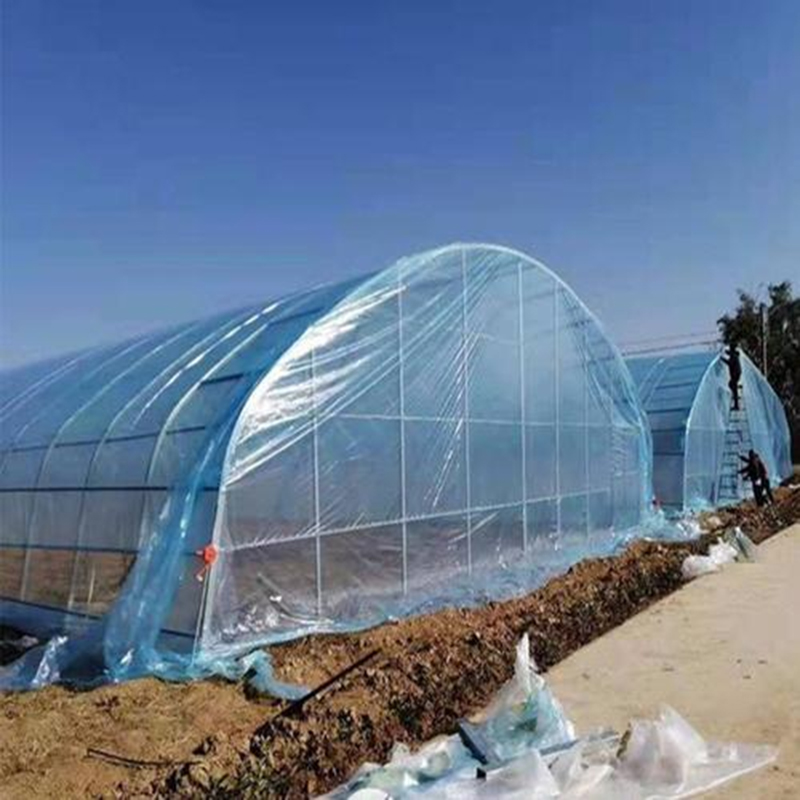
Resistance to Mild Wind and Rain: Although the frame is simple (bamboo and wood / thin-walled steel), combined with tensioned plastic film (usually PE or PVC film), it can resist wind with an average daily speed ≤ Level 5, avoiding direct wind damage to crops; it can withstand light to moderate rain, and quickly drain water through the slope of the greenhouse to prevent water accumulation from soaking crop roots. However, the drainage ditches around the greenhouse need to be cleaned in advance to avoid heavy rain backflow (it cannot resist extreme weather such as heavy rain, strong wind, and hail, requiring temporary reinforcement or early harvesting).
Frost / Dew Damage Prevention: The film covering forms a closed space, which can reduce ground heat loss. When the night temperature is close to the freezing point, it can increase the temperature inside the greenhouse by 2-5℃, effectively preventing late frost and early frost from damaging crops; at the same time, it avoids dew directly dripping on crop leaves, reducing the incidence of diseases such as downy mildew and gray mold.
Shading and Cooling: In summer, it can be replaced with a sunshade net (or covered with shading material with a shading rate of 30%-50% outside the film) to block direct strong light, reduce the temperature inside the greenhouse by 3-8℃, avoid sunburn of vegetables, flowers and other crops, and maintain ventilation at the same time to reduce excessive growth caused by high temperature and high humidity.
Moisture Retention and Wind-Sand Resistance: In dry and windy areas, the closed film can reduce water evaporation inside the greenhouse, maintaining air humidity at 60%-80% (suitable for the growth of most crops); at the same time, it blocks sand and dust invasion, protecting crop leaves and fruits from wear and tear.
II. Adaptable Temperature Range
The simple cold greenhouse has no active heating equipment, and temperature regulation relies on natural lighting and ventilation, with clear boundaries for the adaptable temperature range:
Suitable Growth Temperature: The greenhouse heats up through sunlight during the day, 5-10℃ higher than the outside, and the thermal insulation effect at night is 2-5℃ higher than the outside, which is mainly suitable for the crop growth temperature of 10-30℃. For example: when the outside temperature is 5-15℃ in spring, the inside of the greenhouse can reach 12-25℃, meeting the needs of vegetable seedling raising and growth; when the outside temperature is 8-20℃ in autumn, the inside of the greenhouse can maintain 15-28℃, extending the crop growth period.
Temperature Tolerance Limit
Minimum Tolerable Temperature: It can withstand -2℃ inside the greenhouse for a short period (1-2 days) (with the cooperation of covering straw mats and thermal insulation quilts). Long-term temperature below 0℃ will cause crop frost damage. Therefore, it needs to be idle in winter in northern China or only used for storing low-temperature-tolerant crops (such as Chinese cabbage and radish).
Maximum Tolerable Temperature: Without shading in summer, the temperature inside the greenhouse may rise above 38℃, exceeding the tolerance limit of most crops (suitable upper limit is 32℃). It is necessary to cool down through vents and sunshade nets, otherwise it will cause crop wilting and abnormal flower bud differentiation.
Temperature Regulation Methods: Adjust the temperature by opening and closing the vents on both sides and rolling up the edge of the film; close the vents when heating up and open them when cooling down; in winter, cooperate with straw mat covering to increase the temperature inside the greenhouse by 3-5℃.
III. Adaptable Geographical Range
Due to its low cost and flexible construction, the simple cold greenhouse is suitable for most regions in China, and the core adaptation logic is combined with the regional climate characteristics:
Northern Regions (Northeast, North China, Northwest):
Adaptable Scenarios: Early-maturing cultivation in spring (March-May), delayed cultivation in autumn (September-November), and storage of low-temperature-tolerant crops in winter.
Regional Characteristics: Cold and long winter (temperature -20℃ to 0℃), cool and short summer (temperature 20-30℃). The simple cold greenhouse is mainly used for “early spring and delayed autumn” to make up for the short growth period of open-field cultivation; for example, greenhouses in Northeast China can raise seedlings in April and transplant them to the open field in May, harvesting one month earlier than open-field cultivation; in arid areas of Northwest China, cold greenhouses can prevent wind and sand, retain water, and improve crop survival rate.
Notes: The film needs to be removed or covered with thermal insulation materials in winter to avoid the frame being crushed by snow; in spring, it is necessary to guard against late spring cold and prepare straw mats for thermal insulation in advance.
Southern Regions (East China, Central China, South China, Southwest):
Adaptable Scenarios: It can be used for vegetable and flower cultivation throughout the year, shading and cooling in summer, avoiding rain and waterlogging in rainy seasons, and mild thermal insulation in winter.
Regional Characteristics: Hot and rainy summer (temperature 25-35℃, large rainfall), mild winter (temperature 5-15℃). The core functions of the simple cold greenhouse are “rain avoidance, shading and thermal insulation”; for example, in the rainy season (April-June) in South China, cold greenhouses can prevent rain from directly scouring crops and reduce diseases; when the temperature is low in winter in East China, cold greenhouses can increase the temperature inside the greenhouse by 2-5℃ to avoid crop frost damage; in mountainous areas of Southwest China with heavy fog and high humidity, cold greenhouses can ventilate and reduce humidity, reducing the occurrence of diseases.
Notes: Drainage of the greenhouse needs to be strengthened in rainy seasons to avoid water accumulation inside the greenhouse; in typhoon-prone areas (such as the southeast coast), the frame needs to be reinforced (steel frame selected) and the height of the greenhouse reduced to prevent it from being blown over by typhoons.
Special Regions (Plateau, Basin)
Plateau Areas (such as Qinghai, Tibet): High altitude, strong light, large temperature difference between day and night. The simple cold greenhouse can keep warm and prevent ultraviolet burns, suitable for vegetable and highland barley seedling raising; thickened film needs to be selected to improve the thermal insulation effect.
Basin Areas (such as Sichuan Basin): High humidity and frequent rainy weather. Cold greenhouses can ventilate and reduce humidity, avoid rain, and reduce crop root rot and disease problems.
IV. Core Application Fields
Due to its simple structure and low cost (the cost per mu is only several thousand yuan, much lower than that of greenhouses), the simple cold greenhouse is widely used in agricultural production and some auxiliary scenarios:
Vegetable Cultivation (Core Field)
Common Crops: Leafy vegetables (Chinese cabbage, lettuce, oilseed rape), fruit vegetables (cucumber, tomato, pepper, eggplant), rhizome vegetables (radish, carrot).
Application Scenarios: Seedling raising in spring (such as tomato and pepper seedling raising), early-maturing cultivation (occupying the market in advance), delayed cultivation in autumn (extending the harvesting period), rain-shielding cultivation in rainy seasons (avoiding vegetable root rot); for example, cucumbers are planted in greenhouses in northern China in spring, planted in April and harvested in May, 20 days earlier than open-field cultivation; lettuce is planted in greenhouses in southern China in summer, and sunburn is avoided by shading and cooling to prevent bolting due to high temperature.
Flower Planting
Common Crops: Herbaceous flowers (petunia, marigold), potted flowers (scindapsus aureus, chlorophytum comosum), cut flowers (carnation, gerbera).
Application Scenarios: Flower seedling raising, flowering period regulation (advancing or delaying flowering through temperature regulation), winter thermal insulation (avoiding flower frost damage); for example, through cold greenhouse thermal insulation before the Spring Festival, herbaceous flowers can bloom during the Spring Festival, improving economic benefits.
Seedling Cultivation
Common Crops: Fruit tree seedlings (apple, pear, peach seedlings), greening seedlings (poplar, willow seedlings).
Application Scenarios: Seedling cold protection in spring, shading and sunburn prevention in summer, moisture retention and growth promotion; simple cold greenhouses can reduce seedling mortality and shorten the cultivation cycle.
Other Fields
Edible Fungus Cultivation: Some shade-tolerant edible fungi (such as oyster mushroom and shiitake mushroom) can be planted in cold greenhouses, creating a suitable growth environment by adjusting ventilation and humidity.
Crop Storage: In winter, it can be used to store low-temperature-tolerant crops such as Chinese cabbage, radish and potato, and the storage period can be extended by covering with film for thermal insulation.