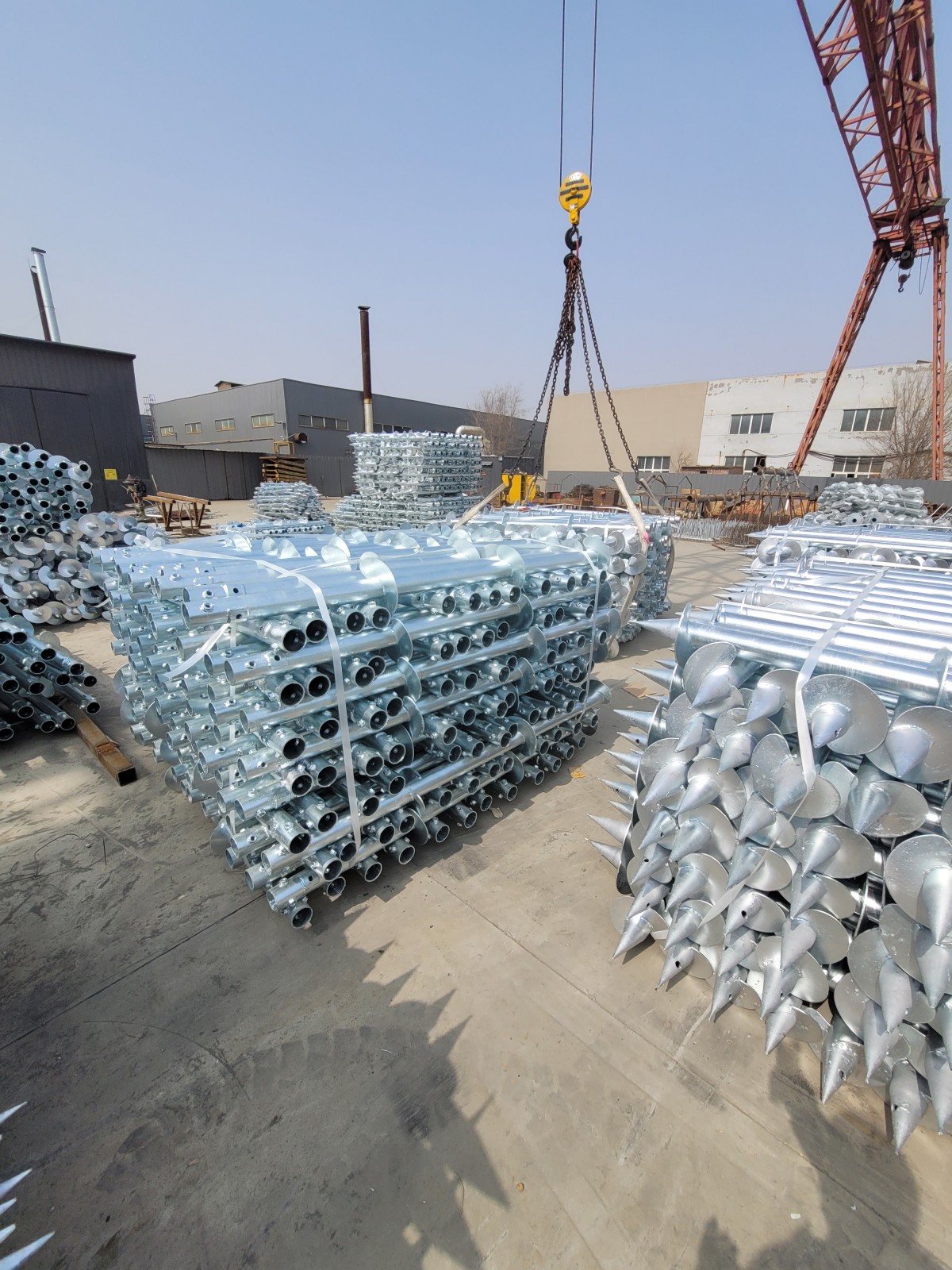
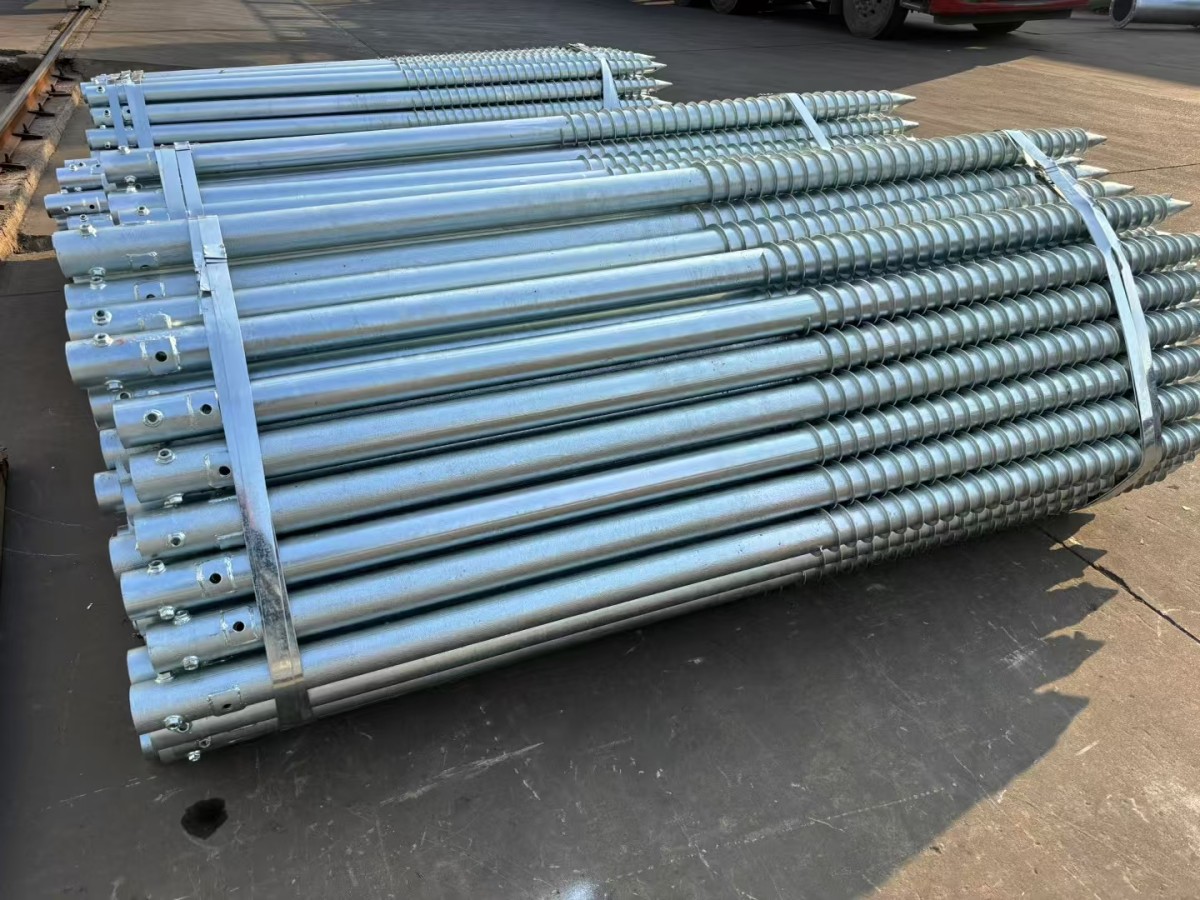
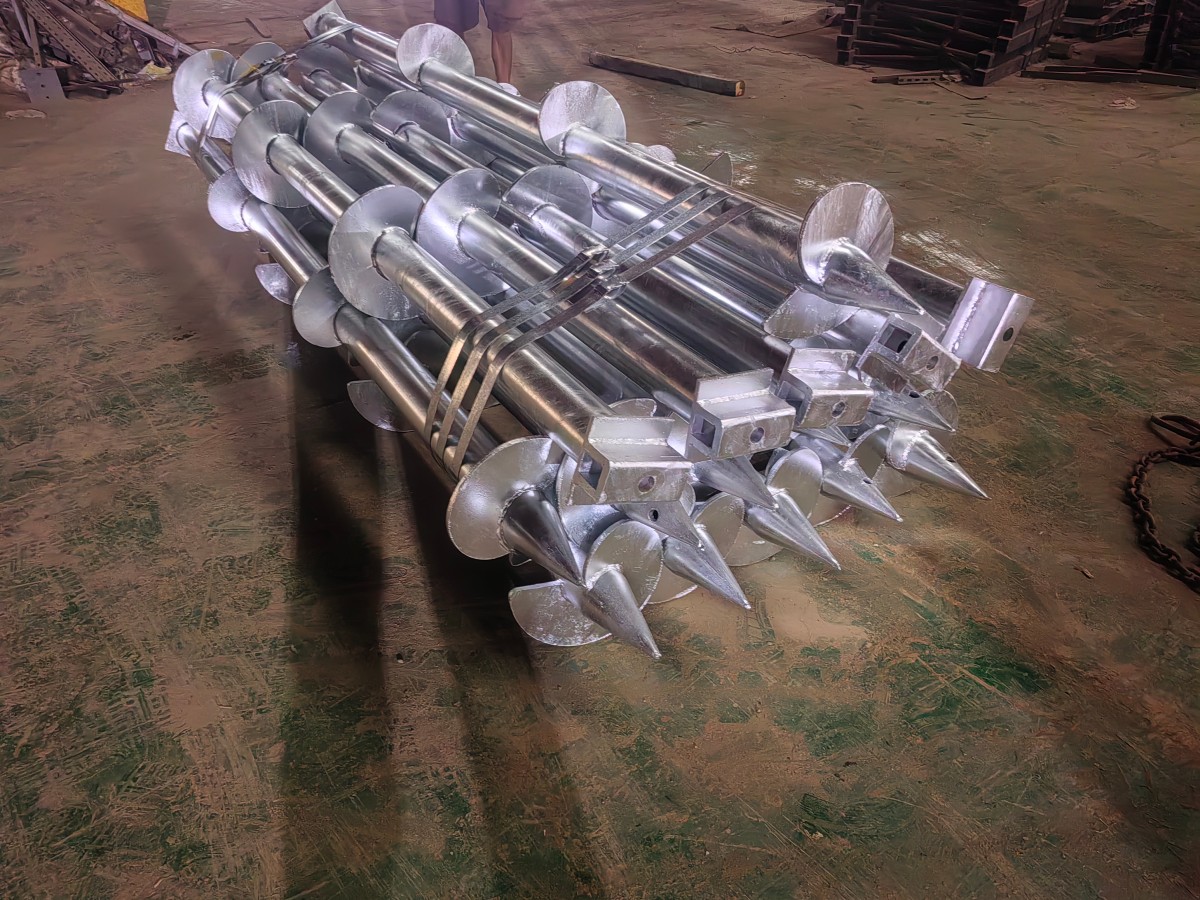
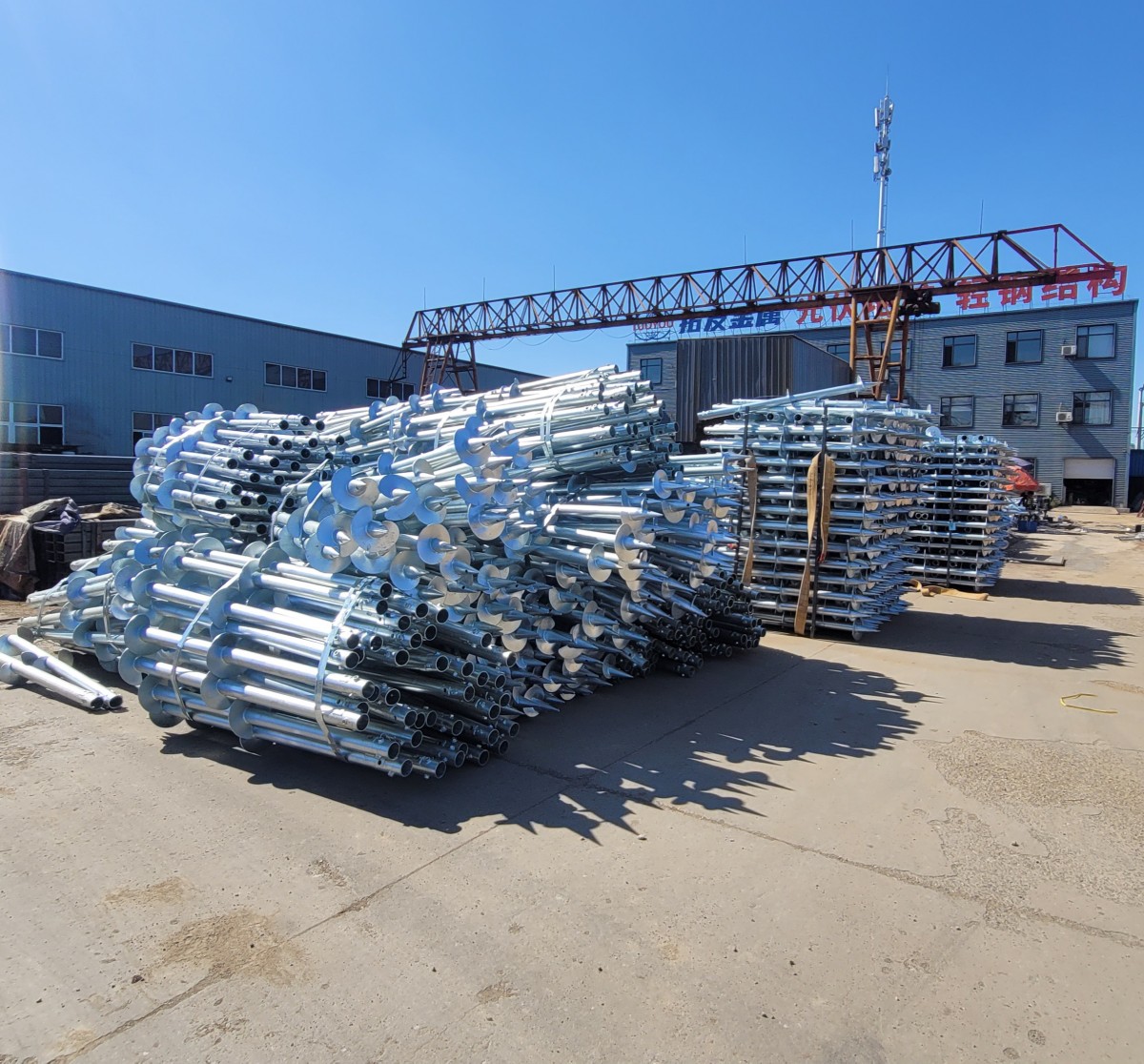
-
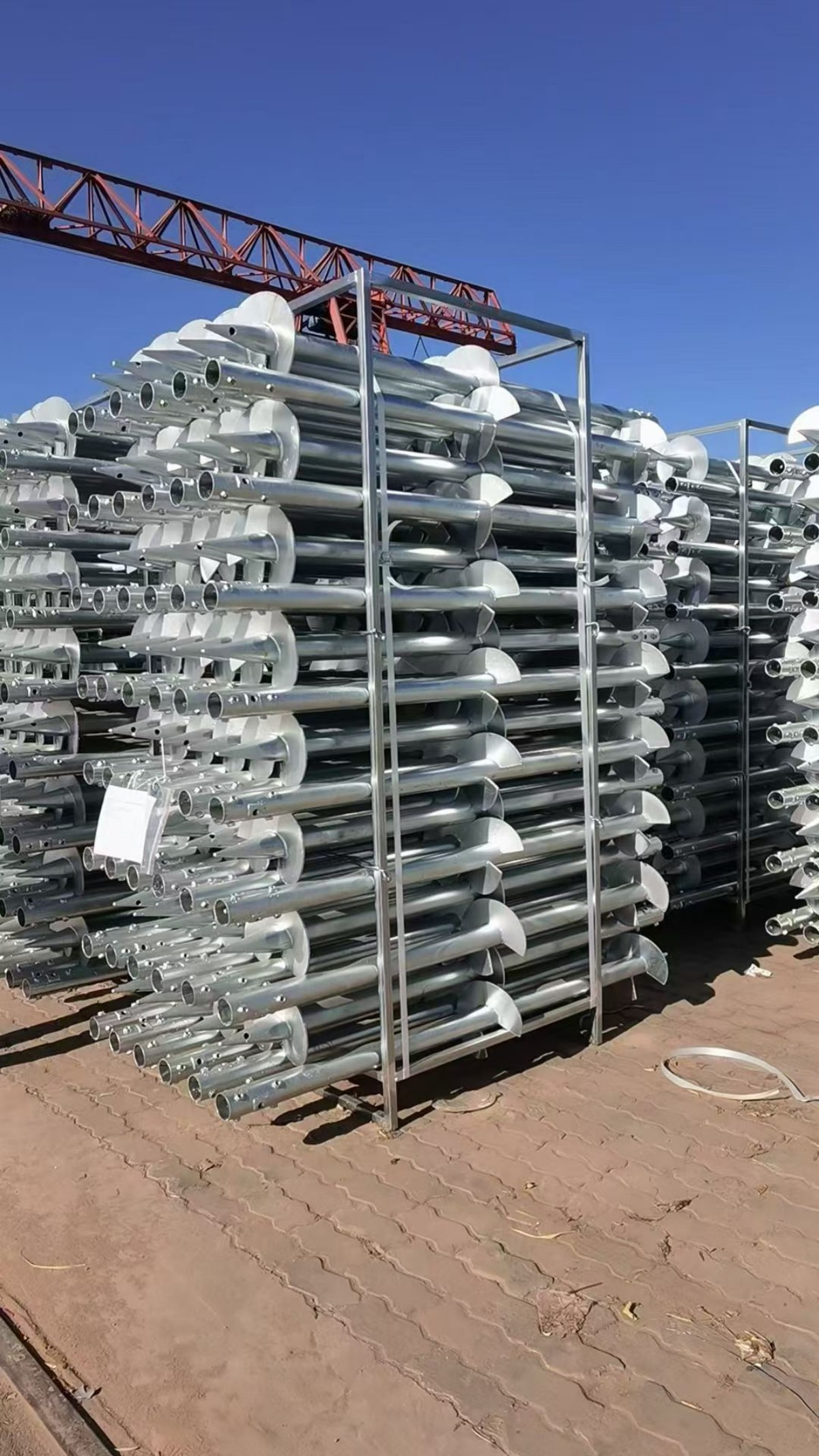
The overall structure and parameters can refer to the split-type spiral pile.
-
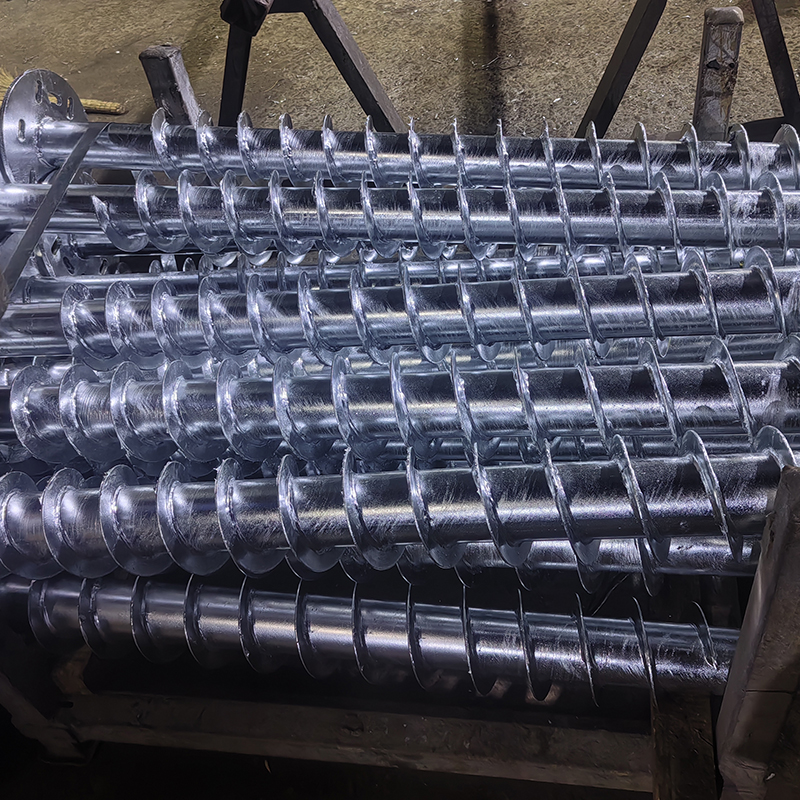
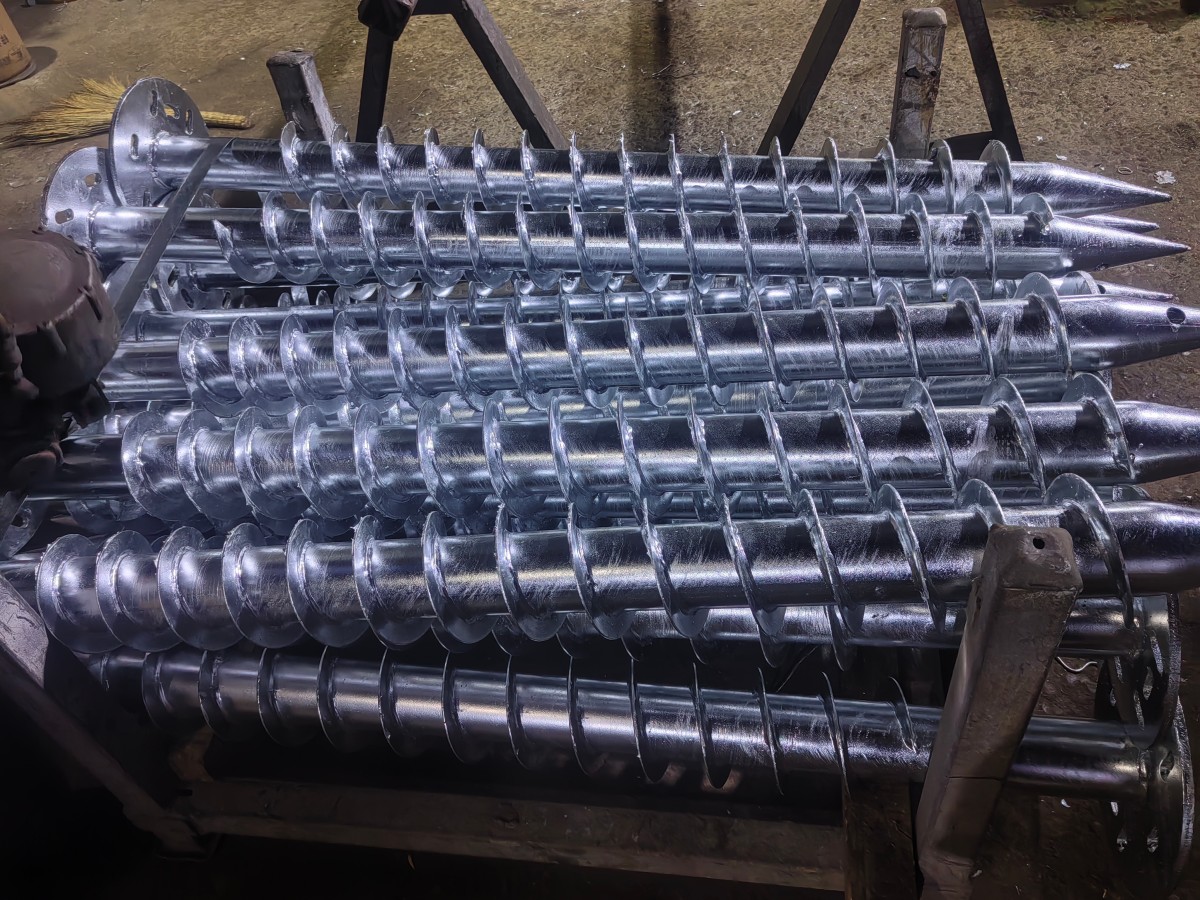
Different from the split-type spiral pile, the continuous spiral surface has a large contact area with the soil, resulting in high resistance during screwing in, which requires higher power of piling equipment. It is not suitable for rapid penetration in hard formations, and the positioning difficulty during construction is slightly higher. However, its integrated structure does not require segmented assembly, the overall installation process is smooth, and piling can be completed efficiently in suitable formations.
-
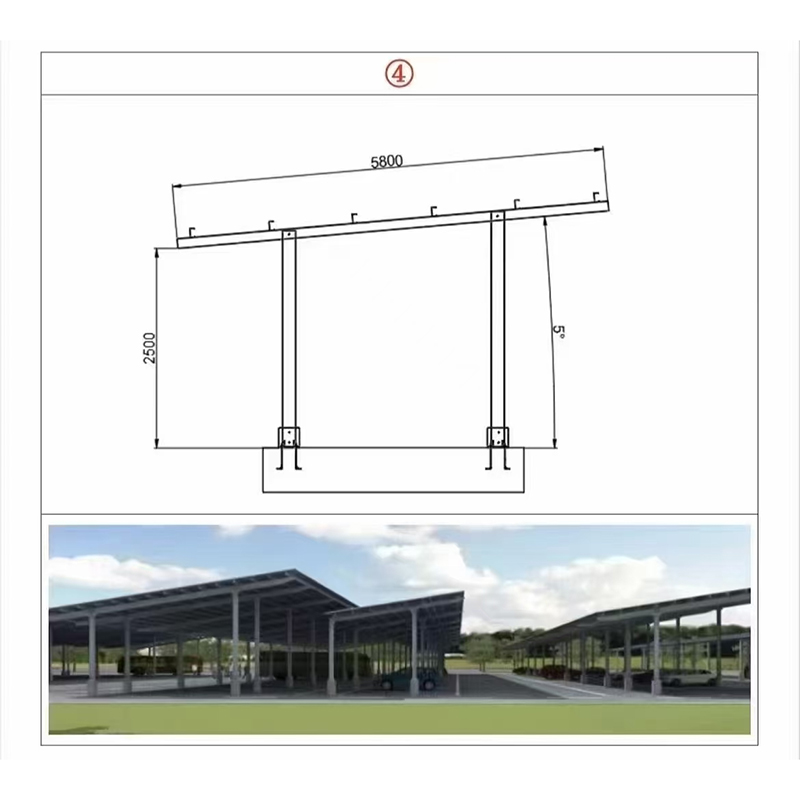
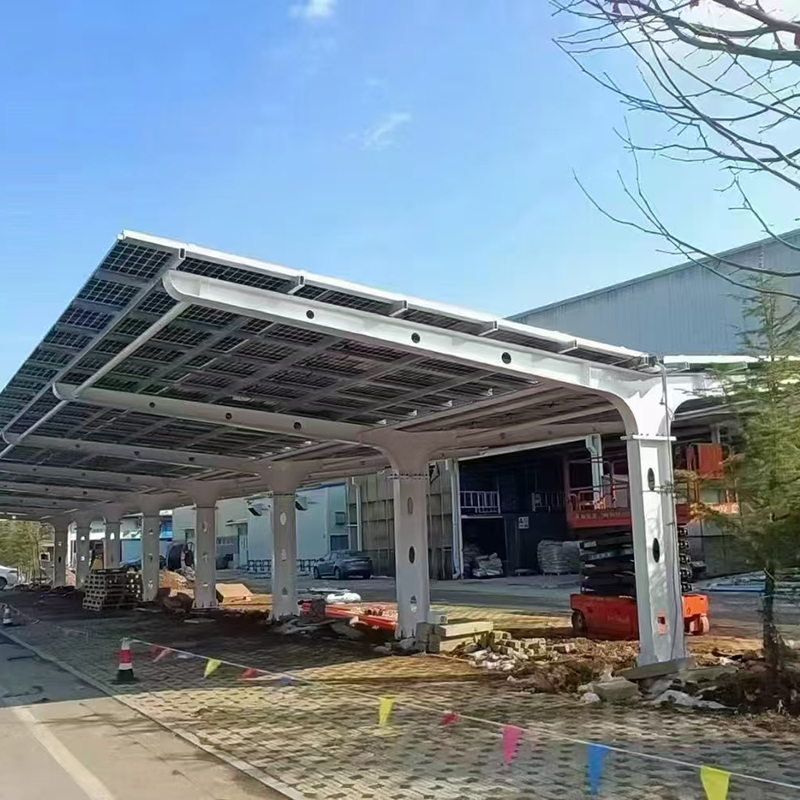
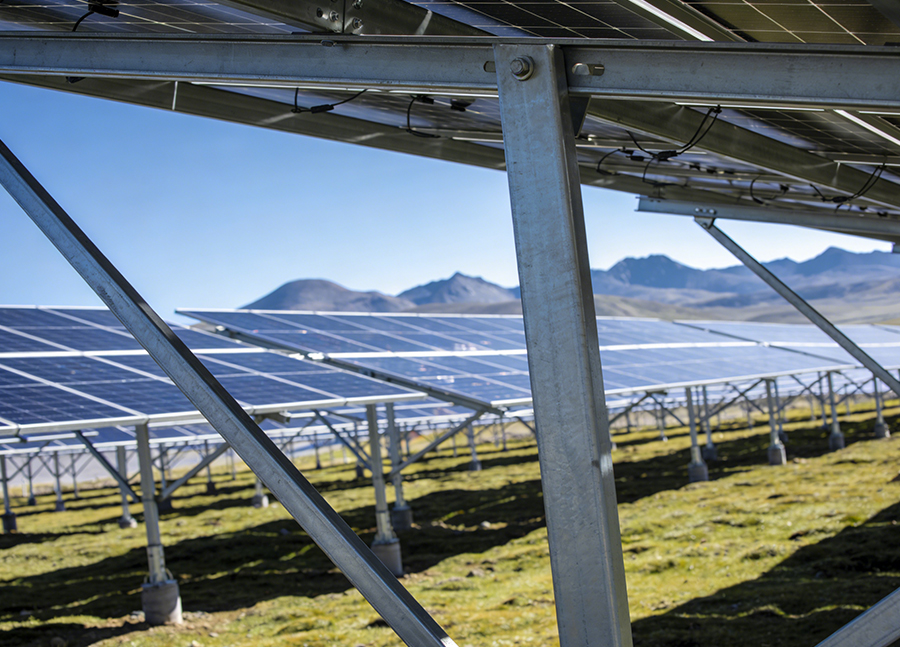
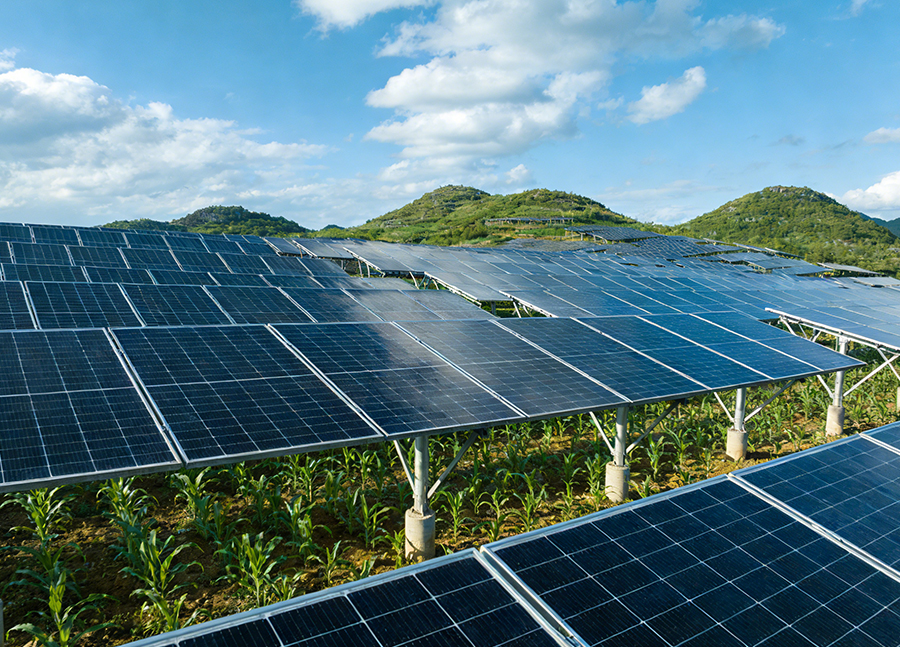
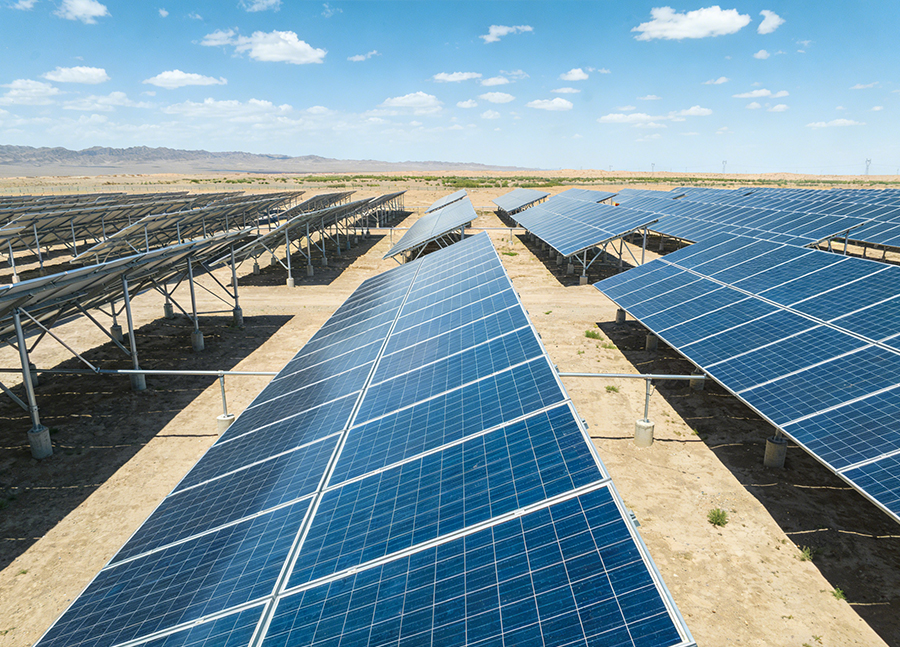
When the continuous spiral structure penetrates into the soil, it can continuously squeeze the soil to form a dense soil core, greatly increasing the contact stress area with the soil. This structure can significantly improve the uplift bearing capacity and anti-overturning capacity of the pile. For example, in photovoltaic power stations and other scenarios, it can stably support the long-term load of photovoltaic panels and brackets, adapting to projects with high requirements for foundation stability.
-
Due to its stable bearing performance, it is often used in large-scale engineering projects with high requirements for foundation stability, such as photovoltaic power stations, wind power generation bases, wooden houses and villas. Its smooth surface and not easy to block characteristics have obvious advantages in soft soil, cohesive soil and other formations, which can not only reduce the entanglement of soil on the blades, but also ensure the stability of long-term use through dense soil.
-
As an integral continuous structure, if local severe wear or deformation occurs, it is often necessary to replace the entire blade or even the pile, resulting in high maintenance costs. However, after cold rolling treatment, it has high surface hardness and wear resistance, and the overall structure has no splicing welds, so the probability of corrosion and damage in conventional soil environment is low, and the frequency of daily maintenance is lower than that of split blades.