I. Applicable Climate: Focus on Core Scenarios of “Precise Regulation + Stress Resistance Requirements”
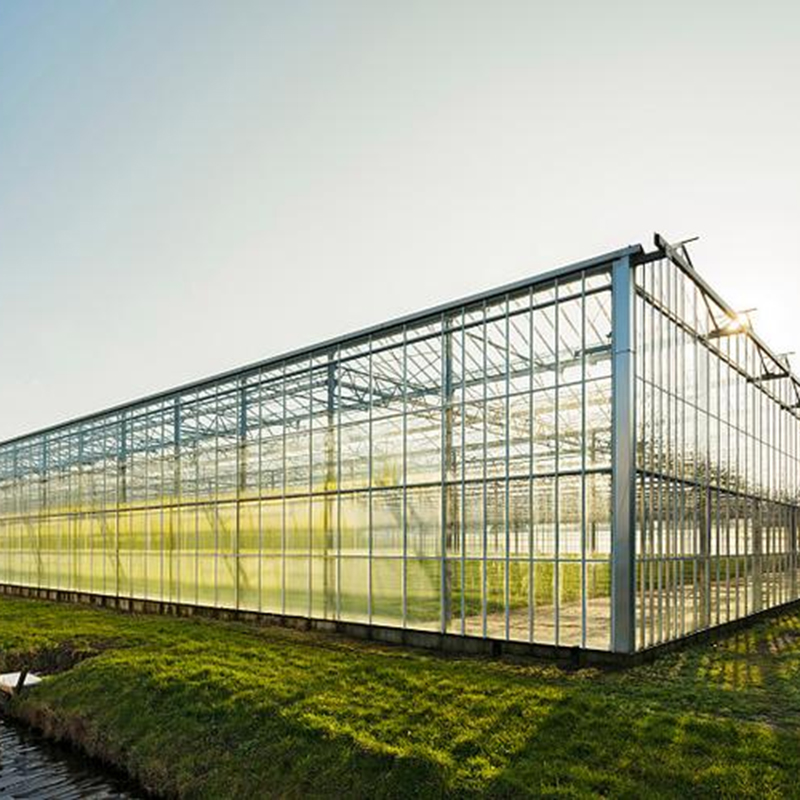
With the characteristics of “excellent sealing performance and improved regulation system”, the core logic of the glass greenhouse adapting to climate is to “avoid the impact of extreme climate and realize stable annual production”. It is specifically applicable to the following climate types:
Temperate Monsoon Climate (Semi-Humid Area)
Typical Features: Cold winter (-10℃~-20℃), hot and rainy summer (30℃~35℃), large temperature fluctuations in spring and autumn, and abundant sunlight.
Adaptation Logic: In winter, efficient thermal insulation is achieved through “double-layer insulating glass + internal insulation curtain + floor heating/hot air furnace”, reducing energy consumption by 30% compared with multi-span film greenhouses; in summer, relying on “top sunshade system + wet curtain fan cooling + top and side window ventilation”, the temperature inside the greenhouse is stabilized at 25~30℃, avoiding crop diseases caused by high temperature and humidity; in spring and autumn, intelligent regulation (such as CO₂ fertilization and supplementary lighting) can offset the impact of temperature fluctuations.
Representative Climate Zones: North China Plain (Shandong, Hebei, Henan), southern Northeast China (Liaoning), central South Korea, northern Honshu Island of Japan, etc.
Subtropical Humid Climate (Sunny Area)
Typical Features: Mild winter (0℃~-5℃), hot and humid summer (32℃~38℃), concentrated precipitation, long frost-free period, and abundant sunlight.
Adaptation Logic: No heavy thermal insulation is required in winter; double-layer glass + simple insulation curtain can meet crop needs; in summer, the key is to solve the high humidity problem through “dehumidification system + ventilation and cooling”; glass material is not easy to condense, reducing the breeding of diseases; abundant sunlight throughout the year gives full play to the advantage of high light transmittance of glass and improves crop photosynthetic efficiency.
Representative Climate Zones: Yangtze River Basin (Zhejiang, Jiangsu, Anhui), Pearl River Delta (Guangdong, Guangxi), southeastern United States (Florida), eastern Australia (Victoria), etc.
Temperate Continental Climate (Oasis and Plain Area)
Typical Features: Severe cold in winter (-20℃~-35℃), hot and dry summer (35℃~40℃), large temperature difference between day and night, extremely abundant sunlight (annual sunshine hours 2800~3500 hours), and scarce precipitation.
Adaptation Logic: In winter, it relies on “triple-layer glass/double-layer insulating laminated glass + internal insulation curtain + central heating”, combined with strong sunlight for heat storage, so that the temperature inside the greenhouse can be stabilized above 15℃; in summer, through “external sunshade + ventilation + spray cooling”, rapid heat dissipation is realized by using the dry climate, without complex dehumidification equipment; glass material is resistant to wind and sand wear, adapting to dry and windy environments.
Representative Climate Zones: Xinjiang Oasis (Urumqi, Changji), Hexi Corridor of Gansu, Ningxia Plain, Amu Darya Plain in Central Asia, etc.
Plateau Mountain Climate (Middle and Low Altitude Area)
Typical Features: Altitude 1000~2500 meters, cold winter (-15℃~-25℃), cool summer (18℃~25℃), strong sunlight (strong ultraviolet radiation), and large temperature difference between day and night.
Adaptation Logic: The glass greenhouse can be equipped with an ultraviolet filter layer to avoid crop damage caused by strong ultraviolet radiation; the centralized thermal insulation design resists low temperature in winter; no cooling is needed in summer, only sunshade is required; under strong sunlight conditions, the high light transmittance of glass can maximize the use of natural light and improve crop yield and quality.
Representative Climate Zones: Central Yunnan (Kunming, Yuxi), western Guizhou, eastern Qinghai, South Island of New Zealand, etc.
Inapplicable Climate:
Extremely Severe Cold and Sunless Areas (below -40℃ with insufficient sunlight, such as northern Heilongjiang and Siberia): The energy consumption for thermal insulation is too high, and the cost performance is lower than that of multi-span greenhouses with cotton quilts;
Typhoon-Prone Areas (such as the southeast coast of China, the Philippines, and southern Japan): Glass is brittle, has weak typhoon resistance, and is easy to break (additional wind-resistant frames need to be installed, resulting in a sharp increase in cost);
Extremely Rainy and High-Humidity Areas (such as southern Fujian and tropical rainforests in Southeast Asia): Condensation is easy to form on the glass surface, the humidity inside the greenhouse is difficult to control, and the steel frame is easy to rust;
Extremely Arid Desert Areas (such as the edge of the Sahara Desert): Although it is suitable for lighting conditions, water resources are scarce, which cannot support the high water-consuming precise irrigation needs of glass greenhouses.
II. Applicable Regions: Focus on the Concentrated Distribution of “High-Value-Added Industries + High-End Market Demand”
The investment cost of glass greenhouses is high (the cost per square meter is 800~2000 yuan, which is 3~5 times that of multi-span film greenhouses). The core of regional distribution is “high-value-added crop planting”, “strong demand in high-end markets”, and “improved technical supporting facilities”, focusing on the following regions:
Core Applicable Regions in China
Northern High-End Protected Agriculture Area:
North China Plain: Shouguang, Shandong (the largest glass greenhouse cluster in the country, accounting for 35% of the national total), Yongqing, Hebei, Tongzhou, Beijing, which are used for large-scale production of high-end vegetables and flowers to supply the high-end markets in Beijing-Tianjin-Hebei;
Northwest Oasis Area: Changji, Xinjiang, Jiuquan, Gansu, where glass greenhouses are used for planting export tomatoes, peppers and other crops, which are exported to Central Asia and Europe relying on the Silk Road Economic Belt;
Southern Northeast China: Haicheng, Dalian, Liaoning, focusing on high-end flowers (lilies, tulips) and seedling cultivation to supply the high-end flower market in Northeast China.
Southern High-End Market Adaptation Area:
Yangtze River Basin: Jiaxing, Zhejiang, Suzhou, Jiangsu, Chongming, Shanghai, where glass greenhouses are used for industrial production of strawberries, high-end leafy vegetables and edible fungi, adapting to the needs of high-end catering and supermarkets in the Yangtze River Delta;
Pearl River Delta: Foshan, Dongguan, Shenzhen, Guangdong, focusing on high-end flowers (phalaenopsis, dendrobium), succulent plants and seedling cultivation to supply the high-end consumer markets in Hong Kong, Macao and South China;
Yunnan-Guizhou Plateau: Jinning, Kunming, Tonghai, Yuxi, Yunnan, the largest concentration area of high-end flower glass greenhouses in the country, with annual output of high-end cut flowers accounting for 25% of the national total, exported to Southeast Asia and Europe.
International Applicable Regions
Asia: Western Netherlands (Randstad region, the global core area of glass greenhouse technology, accounting for 20% of the world’s high-end glass greenhouses), central Israel (around Tel Aviv, a model of water-saving planting in desert glass greenhouses), Shizuoka, Japan, Gyeonggi-do, South Korea, used for industrial production of vegetables and flowers, exported to the world;
Europe: Southern Germany (Bavaria), eastern France (Alsace region), southeastern Spain, where glass greenhouses are used for annual production of berries (strawberries, blueberries) and vegetables to supply the high-end European market;
America: Central Valley of California, central Florida, United States, where glass greenhouses are used for off-season high-end vegetable and flower cultivation to supply high-end supermarkets in North America;
Oceania: Southern Queensland, eastern Australia, North Island of New Zealand, used for large-scale planting of kiwifruit and high-end flowers, exported to the high-end Asian market.
Key Factors for Regional Adaptation:
Industrial Foundation: Having supporting industries such as high-end seedlings, integrated water and fertilizer, and intelligent regulation equipment;
Market Demand: Around urban dense areas or high-end consumer markets (such as first-tier cities and export ports) to support the sales of high-value-added crops;
Technical Conditions: The local area has intelligent greenhouse management technologies (such as environmental monitoring and automatic regulation) and professional talents;
Policy Support: Modern agricultural demonstration zones, high-end protected agriculture subsidy areas (such as the key supported areas for protected agriculture in China’s “14th Five-Year Plan”);
Resource Conditions: Sufficient water resources (to support precise irrigation) and stable power supply (to ensure the operation of intelligent regulation systems).
III. Applicable Fields: Focus on High-End Scenarios of “High-Value-Added, Refined and Industrialized”
With the advantages of “precise regulation, high light transmittance and long service life”, glass greenhouses are mainly used in high-value-added crop planting, industrial production and scientific research fields, including:
High-End Vegetable Industrial Planting Field (Core Application)
Annual Production of High-End Fruits and Vegetables: Glass greenhouses in North China and Northwest China are used for planting high-end vegetables such as cucumbers, tomatoes, colored peppers and eggplants in winter. The area of a single greenhouse can reach 10000~50000 square meters. Combined with soilless culture (hydroponics, substrate culture), integrated water and fertilizer, and intelligent light regulation, the per mu yield can reach 8000~10000 kilograms, which is 3~4 times that of traditional planting, supplying high-end supermarkets and catering chains;
Large-Scale Cultivation of Organic Leafy Vegetables: Glass greenhouses in southern China (Zhejiang, Jiangsu) plant organic lettuce, lettuce, arugula and other leafy vegetables. Through sterile environment control and precise water and fertilizer management, no pesticide residues are achieved, meeting the needs of high-end consumer groups;
Export High-End Vegetable Bases: Glass greenhouses in Xinjiang and Yunnan are used for planting organic carrots, tomatoes, onions and other export vegetables. Standardized production meets the inspection and quarantine requirements of international high-end markets such as the European Union and Japan.
High-End Flower and Seedling Cultivation Field
Industrial Cultivation of High-End Cut Flowers: Glass greenhouses in Kunming, Yunnan and Randstad, Netherlands focus on planting high-end cut flowers such as phalaenopsis, roses, lilies and tulips. Through precise temperature control (flowering period regulation accuracy ±1℃), light management and water and fertilizer regulation, stable annual supply is achieved. The price per plant is 2~3 times that of ordinary flowers, exported to the world;
Rare Seedling Cultivation: Glass greenhouses in Shandong and Jiangsu are used for cutting and grafting of rare fruit tree seedlings (cherries, kiwifruit) and greening seedlings (red maple, Japanese maple). The sterile environment improves the survival rate (more than 40% higher than outdoor seedling raising), meeting the needs of high-end orchards and garden construction;
High-Quality Cultivation of Ornamental Green Plants: Glass greenhouses in Guangdong and Fujian are used for high-quality cultivation of high-end ornamental green plants such as succulent plants, monstera and bird of paradise, controlling plant shape and leaf color, creating high-end potted plants, adapting to high-end home and office scenarios.
Chinese Medicinal Materials and Special Crop Fields
Artificial Cultivation of Precious Chinese Medicinal Materials: Glass greenhouses in Yunnan and Guizhou are used for artificial planting of precious Chinese medicinal materials such as panax notoginseng, dendrobium, paris polyphylla and ginseng. Precise control of temperature and humidity (humidity 60%~70%, temperature 18~25℃) and light intensity simulates the wild growth environment, improves the content of effective components of medicinal materials, and the yield is 2~3 times that of outdoor planting;
High-End Cultivation of Berries: Glass greenhouses in Shandong and Liaoning are used for high-end planting of berries such as strawberries, blueberries and raspberries. The three-dimensional cultivation mode, combined with bee pollination and soilless culture, improves fruit sweetness and taste, adapting to sightseeing picking and high-end gift box sales;
High-End Cultivation of Edible Fungi: Glass greenhouses in Zhejiang and Fujian are transformed into constant temperature and humidity greenhouses for industrial cultivation of high-end edible fungi such as morel and dictyophora indusiata. Centralized regulation of carbon dioxide concentration, humidity and temperature realizes continuous annual harvesting, and the unit price can reach 5~10 times that of ordinary edible fungi.
Scientific Research and Experiment Field (Core Adaptation)
Agricultural Scientific Research Experiments: Glass greenhouses of scientific research institutions such as the Chinese Academy of Agricultural Sciences and Wageningen University in the Netherlands are used for crop variety improvement, stress resistance experiments (drought resistance, cold resistance, disease resistance), and cultivation technology research and development (soilless culture, hydroponic technology). The precise and controllable environmental conditions can ensure the accuracy and repeatability of experimental data and improve scientific research efficiency;
Aerospace Breeding and Biological Breeding: Glass greenhouses of the National Aerospace Breeding Center are used for the cultivation and screening of space-carried seeds. The sterile and precise regulated environment avoids external interference and helps cultivate fine varieties;
Plant Factory Supporting: As an outdoor extension of plant factories, glass greenhouses are used for large-scale production of leafy vegetables and sprout vegetables. Combined with LED supplementary lighting and nutrient solution cultivation, industrial production of “zero pesticides and zero pollution” is realized.
Sightseeing and Popular Science Agriculture Field
High-End Sightseeing Picking Gardens: Glass greenhouses around cities such as Beijing, Shanghai and Guangzhou build high-end sightseeing picking gardens, integrating high-end vegetable, fruit and flower planting, and providing one-stop services of “picking + popular science + experience”. For example, the glass greenhouse picking garden in Chongming, Shanghai has a per capita consumption of 200~300 yuan;
Agricultural Popular Science Education Bases: Glass greenhouses of primary and secondary schools and agricultural colleges and universities serve as high-end popular science education bases, displaying intelligent greenhouse technology, soilless culture and crop growth cycles, and enhancing the professionalism of popular science through intuitive industrial planting scenarios;
Exhibition and Cultural Tourism Supporting: Glass greenhouses of large-scale agricultural exhibitions (such as China International Agricultural Products Fair) and cultural tourism scenic spots are used for flower exhibitions and crop displays, improving the high-end and technological sense of exhibitions and scenic spots.
Other Special Fields
Aerospace Food Production: Glass greenhouses of China’s Jiuquan Satellite Launch Center and NASA in the United States are used for cultivating aerospace food (vegetables, fruits), strictly controlling pollutants and microorganisms to ensure the food safety of astronauts;
Urban Agriculture and Vertical Farms: Glass greenhouses in first-tier cities (such as Shanghai and Shenzhen) are used for the construction of urban vertical farms, using idle urban spaces (roofs, basements) to realize localized vegetable production, reducing transportation costs and carbon emissions;
Pet Food Raw Material Planting: Glass greenhouses in Guangdong and Zhejiang are used for planting pet food raw materials (high-end forage, vegetables), without pesticides and additives, adapting to the needs of the high-end pet food market.